
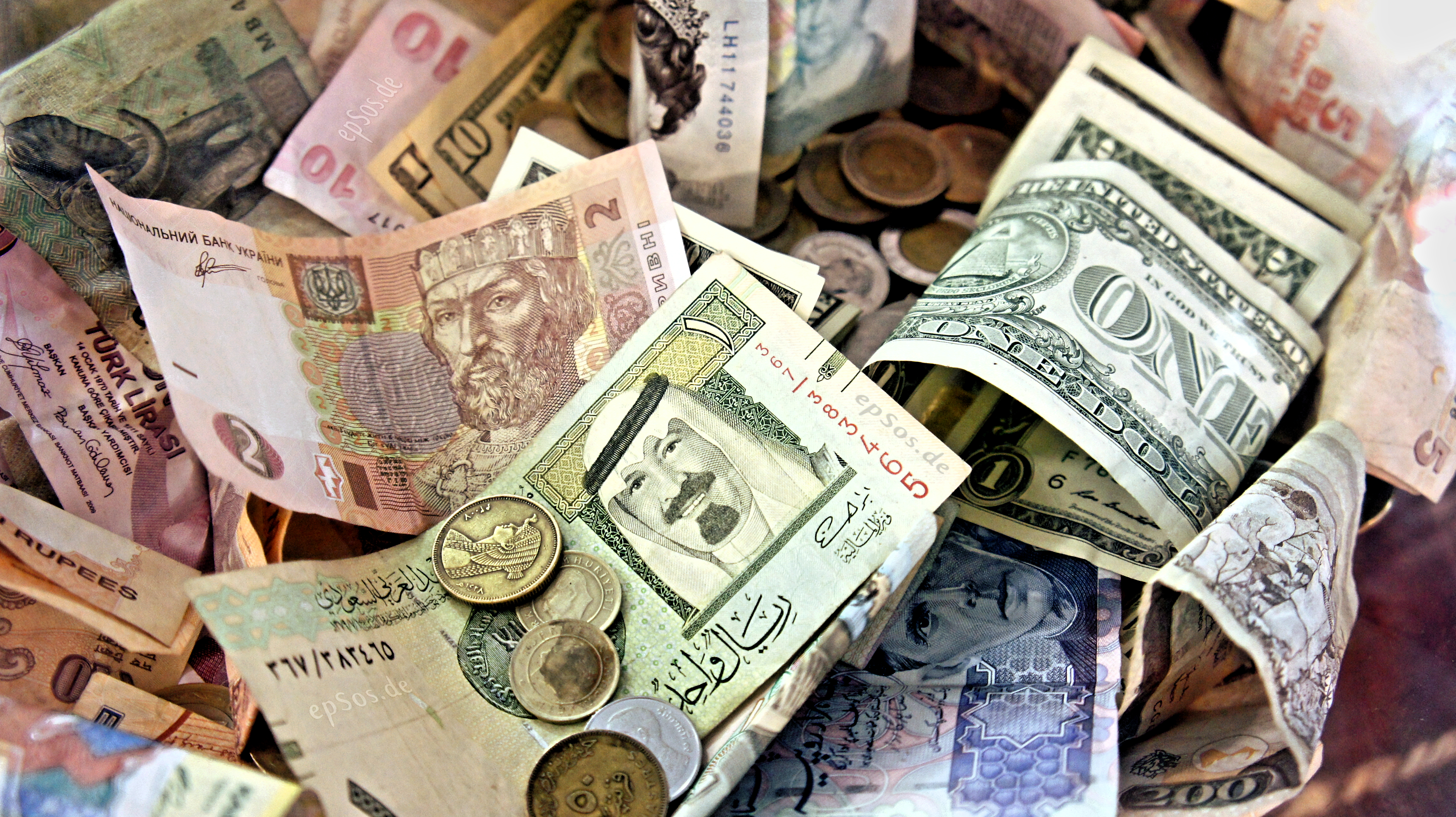
currency

The Currency Hack

by Dan Robles on August 29, 2012

This is the final post of the Financial System Hack Series.  Contrary to conventional wisdom, the currency is the last hack, not the first.  Only after Zertify, Gamidox and Exoquant are established would it be possible to introduce a currency that could compete, if not hedge the dollar.

With Zertify we can estimate the probability that a collection of knowledge assets will be able to execute a business plan some time in the future.

With Gamidox, The Value Game is played where several communities interact around a shared asset such as a condominium, airplane, school, hospital, road, car, or any “product” that has socially redeeming value.

These interactions are measured such that we can assign “value” to the game with the Exoquant algorithm.

So taken together:

If we can predict the probability that the interactions carried out by communities of people (relative to a product) will have a known value in the future, we can represent it as a “cash flow” with a known volatility (risk).  Now, combining many interactions carried out by many communities around many products with known volatilities, we can pool the predicted cash flows into one large diversified cash flow.  Next, we can  cut the large flow into “bonds”, which we can extrapolate to net present value and to fund the community activities.  This very similar to the way that corporation form and raise money – except without the corporation.  While banks continue to issue Debt Bonds, communities will issue Innovation Bonds in parallel

Here is the hack:

In the old days everyone carried gold around with them to engage in trade.  Since gold was heavy, bankers let people keep the gold in their vaults and they wrote little chits that represented the gold.  After a while, people just traded the chits and it was no longer necessary to convert back to gold with each transaction.  Eventually, the gold standard was eliminated altogether and people just traded the paper that now represents their future productivity (debt), not necessarily gold.

The currency of abundance

Likewise, after a while it would no longer be necessary to convert the community currency into dollars.  As the dollar slowly starts losing it’s value under the weight of the debt load people will just trade community currencies.  All of these values are made visible and validated from Zertify, Gamidox, and Exoquant data.

The antigen will not be triggered because this is exactly the same way that corporations interact with banks to capitalizes and securitizes dollar debt, the difference is that we are capitalizing and securitizing community innovation by measuring data, information, knowledge, innovation, and wisdom.  A currency of abundance can then replace the currency of scarcity.

Nothing Changes and everything changes

Corporations and government can continue activities to the degree that they produce socially redeeming value by simply purchasing innovation bonds from the people with their dollars – if they’ll accept them.

Read More

The Wall Street Hack

by Dan Robles on August 25, 2012

In the first post of this series, we identified the 5 components of a financial system and suggested that Zertify, Gamidox, and Exoquant would serve to simulate their functions in a parallel economy before ultimately being adopted completely.

In this post we will identify the hack on the Wall Street Financial instrument regime.  Although exoquant is a bit technical, the basic hack is quite simple:

  • Everyone knows that money is created through the creation of debt.
  • Everyone also knows that debt is a promise to produce something more in the future.
Likewise:
  • Everyone also knows that innovations increase human productivity.
  • Everyone also knows that innovation is a promise to produce something more in the future.

Here’s the hack:

Therefore, a currency backed by debt and a currency backed by innovation are both backed by future productivity.  As such, two currencies backed by the same underlying asset are fully convertible with each other.  Water dissolves water and innovation dissolves debt.

Here is how the Wall Street algorithm works: 

  • People produce stuff in exchange for money
  • Bankers do not care about money, they care about the rate of change of money over time.  This is called the “interest” rate.
  • Stockholders do not care about interest rate, they care about the rate of change of interest rate over time, this is called growth rate.
  • Hedge fund managers do not care about growth rate, they care about the rate of change of growth rate over time, this is the margin on their bets; options, and derivatives, etc.
  • CDOs and other financial exotica become increasingly divorced from the fact that people produce stuff for money.

The Exoquant Analogy:

  • The value of information is derived from the rate of change of data over time
  • The value of knowledge is derived from the rate of change of information over time
  • The value of innovation is derived from the rate of change of knowledge over time
  • The value of wisdom is derived from the value of innovation over time.
In order to “see” innovation before it happens, all we need to do is identify and measure rates of change of information in communities…and so on. Technically, this is a derivative, i.e., something whose value is derived from the value of something else.   All of these metrics can be seen quite readily in the Zertify, Gamidox data sets.  Each is a “derivative” backed by the stuff that people produce rather than the fiction of debt.  The ability to predict future productivity is superior with an innovation backed currency and therefore superior to debt forced productivity – often compared to slavery.

The Silver Bullet

Innovation is a magic word.  The hack is true to the Wall Street math as well as American culture.  Anyone running for public office would not attack the proposition of an innovation backed currency.  Therefore, the hack will not trigger an antigen.
 The next and final post, The Currency Hack, will formulate this innovation currency in more detail.

Read More

Hacking The Financial System

August 22, 2012

Tweet The financial System is made up of 5 components; they act as a system.  If any of these components falters or is corrupted, the whole system becomes unstable. These 5 components are: Markets (demand) Entrepreneurs (supply) Accounting System (inventory) Institutions (to keep the game fair) Currency (storage and exchange of value) For example: The [...]

Read the full article →

The Rango Prophesy

July 2, 2012

Human knowledge, like water is constrained behind artificial barriers called “intangible” asset accounting. To build an accounting system that makes knowledge assets “tangible” will open the floodgates of the most valuable currency civilization has ever known. Not surprisingly, the protagonists will meet their appropriate demise – suitable for young viewers, of course.

Read the full article →

The Value Game Primer

May 30, 2012
Thumbnail image for The Value Game Primer

The Ingenesist Project is currently building Value Games for clients in aviation, construction, education, affinity groups, and social service communities. Please let us know how we can serve your New Value creation enterprise.

Read the full article →

With Respect To Time

May 18, 2012
Thumbnail image for With Respect To Time

Tweet Yesterday’s post “This is what I believe” I make the following 4 statements: Information is proportional to the rate of change of data with respect to time Knowledge is proportional to the rate of change of information with respect to time Innovation is proportional to the rate of change of  knowledge with respect to [...]

Read the full article →

Elevator Pitch – The Ingenesist Project

April 20, 2012
Thumbnail image for Elevator Pitch – The Ingenesist Project

This will be very important because the inevitable global currency adjustments would not have a direct impact on a non-debt backed currency. In fact, Ingenesist will hedge the dollar. It is likely that everyone reading this post has a vested interest in the outcome; literally and figuratively.

Read the full article →

The 5 Pillars of The Inevitable Economy

January 24, 2012
Thumbnail image for The 5 Pillars of The Inevitable Economy

Any device that can represent human productivity better than today’s money will become that next currency. This can only happen after the four pillars begin to integrate. The currency is supported by the system. The system is NOT supported by the currency.

Read the full article →

The Inevitable Next Economy

January 23, 2012
Thumbnail image for The Inevitable Next Economy

The innovation age will emerge from the integration of tools developed by the knowledge age. So called “social media” is creating thousands of platforms upon which people reorganize themselves around interests, affinities, relationship, and commerce. As these tools integrate; that is, when the output of one tool becomes the input of another tool (and vice versa), a new economic paradigm will emerge.

Read the full article →

Ideas Are The New Currency

December 20, 2011
Thumbnail image for Ideas Are The New Currency

The degree to which society actually produces the things that society actually needs, the new economy should not look much different. The degree to which society does not actually need the things that capitalism produces, great new ideas will emerge.

Read the full article →

Virtual Hub And Spoke System

July 26, 2011
Thumbnail image for Virtual Hub And Spoke System

The organization of people it figuratively (with G+) and literally (with corporations) is the exact same thing. This will become obvious when people discover the necessity to organize their selves into productive communities. But why wait – we can, and we will use social media to form a new system of social organization.

Read the full article →

The Game and The Counter-Game

July 7, 2011
Thumbnail image for The Game and The Counter-Game

The Value Game does not kill the Financial Game, rather, it challenges, corrects, and improves it. The Value game has reached a critical milestone – it has been funded in dollars by investors.

Read the full article →

Why This Bubble Is Completely Different

July 5, 2011
Thumbnail image for Why This Bubble Is Completely Different

As our noble politicians continue to play their game of chicken with the productivity of honest, educated, and productive Americans, they fail to see the polarity shifting away from money and into “true value”.

Read the full article →

Are We Hard Wired?

May 31, 2011
Thumbnail image for Are We Hard Wired?

Social Flights is attempting to do something that has never been accomplished in social media with such high value shared assets. We seek to answer the question: Can people organize themselves around the concept of “Value” much like we have organized ourselves around the concept of “Money”.

Read the full article →

How To Use Data Correctly

May 5, 2011
Thumbnail image for How To Use Data Correctly

The Value Game does not need to know your name, address, phone number, or credit score to compile useful information. The Value Game does even need to know such information about your friends, family, or professional relationships. Nobody needs to know your private information – unless they intend to use your data incorrectly. After all, they need to know who to restrict your data from – you.

Read the full article →

The Value Game Cracks the Monetization Paradox

February 20, 2011
Thumbnail image for The Value Game Cracks the Monetization Paradox

The Value Game is becoming increasingly generalized as more entrepreneurs seek to learn how to apply it to new economic realities. The first company to launch is Social Flights. Quickly funded, in full operation, booking jets and signing contracts, the Social Flights success trajectory has been truly remarkable.

Read the full article →

May The Best Currency Win

February 10, 2011
Thumbnail image for May The Best Currency Win

What do you think every dictator wishes that they had more of right now: guns, money, or social currency?

Read the full article →

Game Over

February 2, 2011
Thumbnail image for Game Over

The first law of Gaming: If you can’t win a game playing by the rules, stop playing the game, or change the rules. It would seem that Egyptians would add a corollary “Change the Rulers”.

Read the full article →

When Everyone has a Coupon, They Will Innovate

January 31, 2011
Thumbnail image for When Everyone has a Coupon, They Will Innovate

Coupled with social media, a coupon can be leveraged to influence the behavior of whole communities in extraordinary ways. The ability to manipulate coupon values is tantamount to the ability to manipulate the value of money itself.

Read the full article →

The New Value Movement

January 19, 2011
Thumbnail image for The New Value Movement

When the total monetary system can articulate the total value of the Earth AND it’s human resources, only then can an organic set of priorities be delivered to a market.

Read the full article →

Creating An Intention Currency

January 7, 2011
Thumbnail image for Creating An Intention Currency

In the last few articles, I’ve been trashing the idea of an influence currency as frivolous, vain, and even dangerous. I have also discussed the importance of Intentions as a superior means of storing and exchanging value because of it’s ability to predicting economic outcomes.

Read the full article →

Printing Social Currency; Influence vs. Intentions

December 29, 2010
Thumbnail image for Printing Social Currency; Influence vs. Intentions

The heat is on to discover a new currency. Everyone is pretty much resigned to the fact that the dollar – and indeed most global currency – is irreversibly divorced from actual productivity

Read the full article →

The 3 Steps To Social Profits

November 29, 2010
Thumbnail image for The 3 Steps To Social Profits

Nothing Economic can happen until two or more people get together to build something. Social Profit is like a fungible option with a face value. If structured correctly, an option can have a face value equal to the difference between discount and full price.

Read the full article →

The Investment Banker Vs. The Innovation Banker

September 22, 2010
Thumbnail image for The Investment Banker Vs. The Innovation Banker

Together with the financial banking, these two system engage in the dance of the virtuous circle of innovation enterprise. Apart, they collapse into the swirling cesspool of eternal debt and infinite interest (pun intended).

Read the full article →
y_E9iq8ed_y-mePfNA3-ToSm2pufnr10TiW-rx6U-ls