finance

The Hack-plications That will Change Everything

by Dan Robles on October 8, 2012

Zertify, Gamidox, and Exoquant (ZGE) are NOT the applications that will change everything.  Rather, the hack-applications that follow on the ZGE data suites will, in fact, challenge the idea that periodic economic collapse and hard-fought restructuring is a necessary inevitability of the human condition.

The current financial system is vulnerable to disruption.

One reason is that it is becoming unstable.  However, by far the more important reason is that it is very inefficient.  The underlying notion that competition alone can determine a winner is wasteful because the time, energy, and resources required to battle, kill off, and dispose of an opponent may exceed, many times over, the value of a win.

What exactly is the nature of winning and losing?

Can truly winning only happen when the opponent is truly dead?  Can a student win by learning even if they can obviously be vanquished by their teacher?  Does a teacher win by living among productive citizens, as they themselves become vulnerable elders?  Can such an exchange form without there necessarily being a financial, or even governmental, intermediaries.  Today, quite the opposite is happening in companies and communities facing both knowledge gap and layoffs.

How Stable are The Stabilizers?

The legal system is very expensive to maintain.  Global military projection is certainly not cost free nor are the subsequent defenses.  Even the so-called competitive “college degree” and “intellectual property” are outliving their accessibility, and therefore, usefulness. Ironically, it will be the financial system itself that is undermined by the scarcity of the lifeblood money.  People will adapt to new forms of enterprise as they have for millions of years.  This is what Zertify accellerates.

What are the alternatives?

It would be vastly unfortunate for civilization if the financial system were to become ineffective prior to  human’s natural evolution to a high order of economics.  In fact, it seems that the failure of society to evolve is the only thing keeping the current financial system in play – there is no other game in town.  Think about it; if money does not represent your productivity, why would you work in exchange for it?  When you can no longer “harvest” your own productivity, why would you sow that field?  People would sow a different field. This is what Gamidox provides. 

Let’s Measure Ourselves Into Existence

History shows that the darkest depths of re-organization preceded prior leaps of human civilization.  But is that ultimate, inevitable competition and sacrifice actually necessary, except to measure the old system out of existence.  People are already quite organized, why do they need to be re-organized except to fit within a measurement system that has outlived it’s usefulness, applicability and relevence.  Exoquant allows the new humanity be measured into a new existence. 

Let’s get it right this time

The ZGE applications provide the intermediate step that never existed at any other time in history.  ZGE are built and structured upon trust networks and Internet connectivity.  Why not start rebuilding now while we still have a chance to get it right, very right.

Read More

The Wall Street Hack

by Dan Robles on August 25, 2012

In the first post of this series, we identified the 5 components of a financial system and suggested that Zertify, Gamidox, and Exoquant would serve to simulate their functions in a parallel economy before ultimately being adopted completely.

In this post we will identify the hack on the Wall Street Financial instrument regime.  Although exoquant is a bit technical, the basic hack is quite simple:

  • Everyone knows that money is created through the creation of debt.
  • Everyone also knows that debt is a promise to produce something more in the future.
Likewise:
  • Everyone also knows that innovations increase human productivity.
  • Everyone also knows that innovation is a promise to produce something more in the future.

Here’s the hack:

Therefore, a currency backed by debt and a currency backed by innovation are both backed by future productivity.  As such, two currencies backed by the same underlying asset are fully convertible with each other.  Water dissolves water and innovation dissolves debt.

Here is how the Wall Street algorithm works: 

  • People produce stuff in exchange for money
  • Bankers do not care about money, they care about the rate of change of money over time.  This is called the “interest” rate.
  • Stockholders do not care about interest rate, they care about the rate of change of interest rate over time, this is called growth rate.
  • Hedge fund managers do not care about growth rate, they care about the rate of change of growth rate over time, this is the margin on their bets; options, and derivatives, etc.
  • CDOs and other financial exotica become increasingly divorced from the fact that people produce stuff for money.

The Exoquant Analogy:

  • The value of information is derived from the rate of change of data over time
  • The value of knowledge is derived from the rate of change of information over time
  • The value of innovation is derived from the rate of change of knowledge over time
  • The value of wisdom is derived from the value of innovation over time.
In order to “see” innovation before it happens, all we need to do is identify and measure rates of change of information in communities…and so on. Technically, this is a derivative, i.e., something whose value is derived from the value of something else.   All of these metrics can be seen quite readily in the Zertify, Gamidox data sets.  Each is a “derivative” backed by the stuff that people produce rather than the fiction of debt.  The ability to predict future productivity is superior with an innovation backed currency and therefore superior to debt forced productivity – often compared to slavery.

The Silver Bullet

Innovation is a magic word.  The hack is true to the Wall Street math as well as American culture.  Anyone running for public office would not attack the proposition of an innovation backed currency.  Therefore, the hack will not trigger an antigen.
 The next and final post, The Currency Hack, will formulate this innovation currency in more detail.

Read More

The New Economy Movement

March 27, 2012
Thumbnail image for The New Economy Movement

What if the solution to the great complexity of economic collapse is actually fairly simple – and we don’t find it. What if the new economy is going to happen whether we want it to or not – and we are not prepared? What if the tipping point to the New Economy is already past – and we are not in the game?

Read the full article →

The Game and The Counter-Game

July 7, 2011
Thumbnail image for The Game and The Counter-Game

The Value Game does not kill the Financial Game, rather, it challenges, corrects, and improves it. The Value game has reached a critical milestone – it has been funded in dollars by investors.

Read the full article →

Model For The Mobility of Engineering Professionals Under NAFTA

March 4, 2011
Thumbnail image for Model For The Mobility of Engineering Professionals Under NAFTA

I published the following paper in 1996 as part of my participation in the negotiations for mutual recognition of Engineering Professionals under NAFTA.

Read the full article →

The Investment Banker Vs. The Innovation Banker

September 22, 2010
Thumbnail image for The Investment Banker Vs. The Innovation Banker

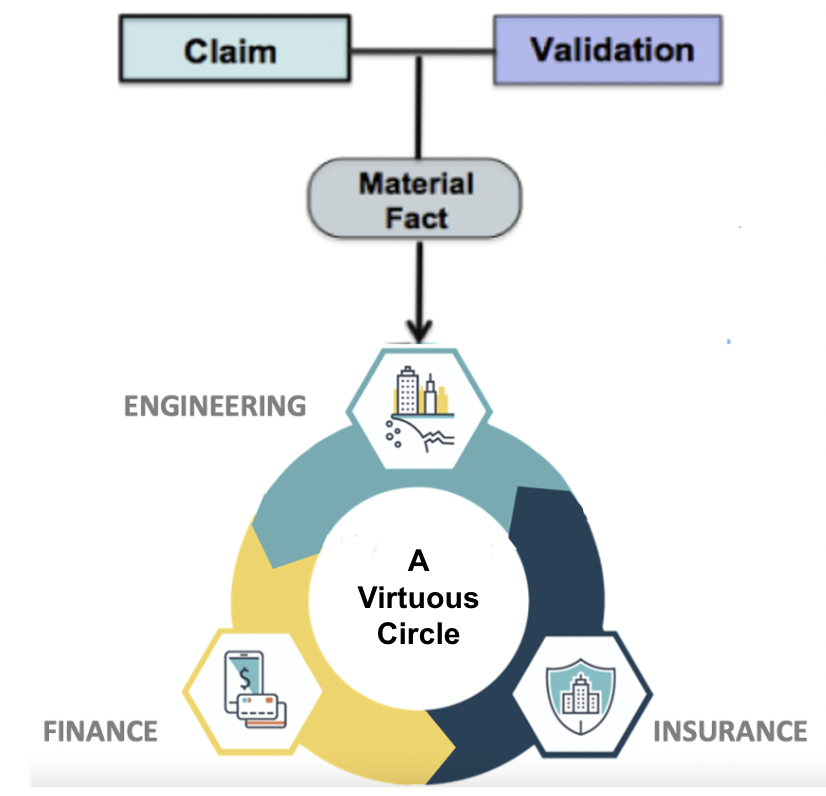
Together with the financial banking, these two system engage in the dance of the virtuous circle of innovation enterprise. Apart, they collapse into the swirling cesspool of eternal debt and infinite interest (pun intended).

Read the full article →

Social Vetting Makes Knowledge Tangible

September 15, 2010

While the progression may not be noticeable, there will be a tipping point where the medium has built enough trust that it can support a currency. This new currency needs to be only a little bit more “trustworthy” than the currency it will replace. This is the point where knowledge becomes tangible.

Read the full article →

Innovation Suicide

April 9, 2010

Any definition is supposed to give the reader enough information to duplicate, recognize, and identify instances of the subject – Preferably before the event has ended. Think about it – if the definition for Innovation were clear, nobody would be asking this question.

Read the full article →

The Brain-Picking Economy

April 8, 2010

[People who ask to pick your brain are either asking you to work for free or they are trying to bypass the very hard work required to build a social network by asking for your referrals].

Read the full article →

Culture: When Engagement Is Not Optional

March 26, 2010

Today we see Social Media duplicating many of the functions of earlier society by storing community wisdom, applying social vetting, and deploying social currencies.

Read the full article →

Gowalla and Foursquare: Money is as Money Does

March 21, 2010

Money happens because people happen, not the other way around.
Wall Street has no idea what’s knocking at their door with the emergence of a new class of Social Media Applications that incorporate geolocation strategy.

Read the full article →

When Social Media Becomes a Science

March 5, 2010

Jay Deragon posted a series of articles recently on his Relationship Economy blog which I found especially exciting. As usual, Jay is bringing forward some very important ideas related to social media components and outcomes, but what really sets this new mindset apart is the fact that Jay is asking the same questions that have been plaguing scientists for 100 years.

Read the full article →

The New Definition of Innovation

February 12, 2010

The existing definition of innovation is insufficient for use as a way to identify innovation in the present. There is no way to build an innovation economy upon a flawed definition and unpredictable value of innovative activity.

Read the full article →

Breaking The Monopoly on Money

February 10, 2010

Many people doubt that the dollar has more than a decade or so of steam left as the interest on debts mythically exceeds the total amount of money on Earth (at least in my world). Yet banks march on, heading straight for the cliff.

Read the full article →

Video: America; A Next Developed Country

February 5, 2010

Now that the factories are gone and the rest of the World has copied all of our tricks (while not copying our mistakes) it is time to move on. What is that next watershed economic paradigm? Who is going to figure this one out? The ones who do will define the new meaning of “A Most Developed Country”

Read the full article →

Video: Dollar Vs. Rallod; A Mirror Image Economy

February 4, 2010

Therefore, debt and innovation are blood brothers or mirror images of the other – they are both “currencies” (means of storing value) backed by future productivity. We can build a new economy around this concept which effectively weeds out the bad parts and keeps the good parts of the institutions and infrastructure that are already in place.

Read the full article →

Video: Intellectual Property in the Social Media Cloud

February 3, 2010

Or maybe the last thing that Wall Street wants is for Engineers, Architects, designers, and creative people to get “royalties” on their work. That is What Wall Street does, they collect the royalties of the creative people in America….until now. Social media is a social contract, IP is our currency.

Read the full article →

Video: Tangible Knowledge; The Holy Grail of Social Media

January 22, 2010

What if knowledge assets were tangible? What if you owned your knowledge like a company owns a structure or specialized machinery? What if it could be quantified and qualified so that it resembles all other tangible assets? Easy answer…entrepreneurs will trade it, like money.

Read the full article →

Calculating The ROI of Social Media

January 18, 2010

This video introduces a new way of looking at social media valuation. People find value in social media otherwise they would not do it. How is that value expressed as a financial instrument? If you engage your clients in the same currency that they are trading among themselves, the greater the likelihood you will realize the value of the new media phenomenon.

Read the full article →

Conversational Perjury

December 17, 2009

As brands get social, they enter the new media performing their best interpretation of a conversation. Face it, they are still going for the kill – like a wolf in sheep’s clothing – the dance of the pitch is just getting more sophisticated. Social media is powerful followed closely by the of abuse .

Read the full article →

Pirates, Anarchy, and the Monetization of Social Media

December 11, 2009

No sane blogger would post an article suggesting that anarchy is superior to government as a means of producing widespread cooperation…or would they? So far, the result has been phenomenally successful in social media and therefore demonstrates that anarchy may in fact work better than government.

Read the full article →

The Great Currency Shift

November 19, 2009

I am seeing an increasing amount of articles and ideas related to an alternate financial system. The continued traditional media narrative implies that the current system is unstable and corrupted with insider deals, Ponzi schemes, bribes, and high profile acquittals of financial crime. The underlying age-old assumption is that the wealthy (merchant class) will win and the rest of us (the working class) will lose.

Read the full article →

Is the Credit Score Obsolete?

November 12, 2009

The justification is that credit rating did not predict or help avoid the last crisis, so what good are they? The new twist: The bankers put their personal and corporate reputations on the line. If you trust the banker, you can trust their bond.

Read the full article →

Banks In The Present

October 28, 2009

I see a lot of articles asking the question why people are not absolutely livid about what is happening to them. The degree at which their wealth is being transferred away from them and the debt being shod on their grandchildren is astonishing.

Read the full article →
y_E9iq8ed_y-mePfNA3-ToSm2pufnr10TiW-rx6U-ls